


News Center
Get the latest news about Konger, including new product launches, industry exhibitions, technical updates and market trends of the injection molding industry.
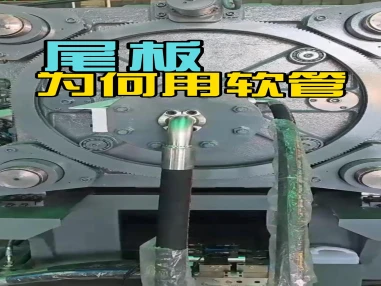
Reason for using hoses on the tail plate of Konger horizontal injection molding machine
On Konger horizontal injection molding machines, hydraulic hoses are used for the rear platen (tail plate). The toggle mechanism makes the rear pla。
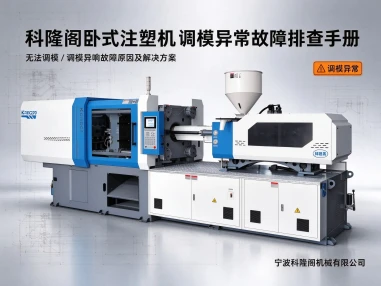
Horizontal Injection Molding Machine Mold-Adjusting Abnormalities (Unable to Adjust Mold / Abnormal Noise During Mold Adjustment) Troubleshooting Manual
For electric mold-adjustment models: power and communication faults, mold-adjusting servo drive alarm, servo motor failure.

Notice of Mid-Autumn Festival Holiday Ningbo Konger Machinery Co., Ltd.
To all staff: The Mid-Autumn Festival is approaching.
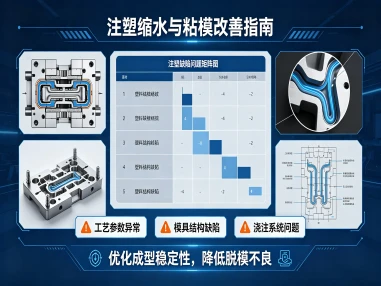
Comprehensive Analysis of the Causes of Injection Mold Sticking Faults and Targeted Solutions
Injection mold sticking (mold sticking to the mold) is a high-frequency quality defect in plastic molding production. Specifically, after the mold opens, the plastic product firmly adheres to the surface of the front mold or rear mold cavity/core and cannot be demolded and removed normally, easily causing product scratches, deformation and scrapping, while also delaying the production rhythm, reducing injection molding production efficiency, and seriously affecting mold service life and mass-production stability. Combining first-line injection molding production practical experience, this article comprehensively sorts out the core causes of mold sticking and related product shrinkage faults, analyzes the problems from multiple dimensions including injection molding process parameters, mold structure design, mold surface condition and gating system, and provides standardized, implementable rectification countermeasures, providing technical reference for injection molding manufacturers to quickly solve sticking problems and optimize molding processes.
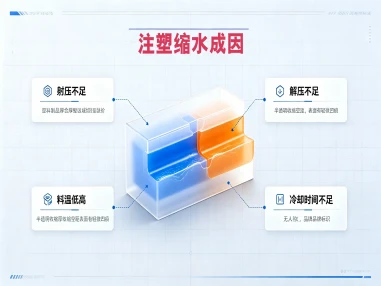
Analysis of the Causes of Product Shrinkage in Injection Molding and Solution Interpretation
Ningbo Konger Machinery has long been deeply engaged in the R&D of high-end injection molding equipment and the optimization of precision injection molding processes. Relying on a large number of on-site commissioning cases and equipment technical accumulation, it has completed multi-dimensional root-cause analysis of injection shrinkage defects, forming standardized solutions covering process, equipment, mold and raw materials, helping injection molding enterprises precisely solve shrinkage defects and stabilize mass production quality, reasonably extend cooling time, ensure products are fully cured and set before demolding, and avoid secondary shrinkage indentations in the later stage.
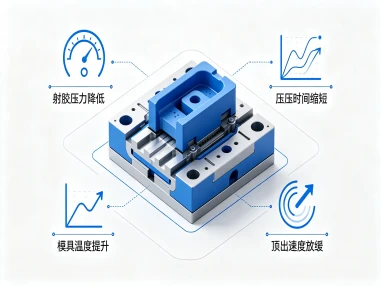
Difficult Demolding of Injection Molded Products | Causes and Solutions for Parts That Are Hard to Eject After Mold Opening
After mold opening, the product is stuck on the core or cavity and cannot be smoothly ejected, which easily causes part scratches, ejector white marks, cracking and deformation, and in severe cases, ejector pin breakage and mold damage, directly reducing production yield and lengthening the molding cycle, bringing shutdown losses and rising production costs to the enterprise. The essence of difficult demolding is that the shrinkage grip force and frictional resistance generated by the plastic part on the mold after cooling shrinkage are greater than the effective ejection force the equipment ejection system can provide. The fault sources span injection molding process...

Ningbo Konger | Quick Machine Selection Guide
1. CMS two-color mixing / CMS-3Color three-color mixing (Chameleon series): Suitable scenarios: need gradient textures, marble cloud patterns, sandwich layered structures, and want to use regrind/secondary material to reduce raw material costs; supports sandwich co-injection: virgin material on the surface layer ensures appearance quality, regrind/recycled material fills the inner layer, reducing overall raw material cost by 15%~25%; products with thin walls and many fine structures, pursuing natural gradient colors and low...
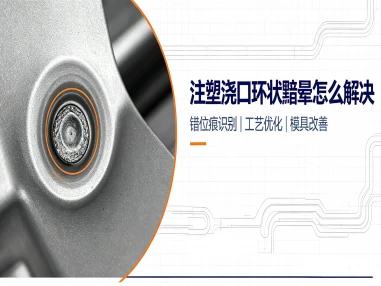
Technical Insights | Causes and Systematic Improvement Solutions for the Ring-Shaped Halo (Gate Smear / Haze Ring) Around the Injection Gate
During precision injection molding mass production, many appearance parts show a typical defect: a ring-shaped dull halo forms around the gate, commonly called gate smear or gate halo in the industry. This color-difference defect directly affects the appearance grade of products and, in severe cases, directly causes batch defects, raw material loss and delivery delays. It is widely seen in the production of home appliance housings, 3C accessories, daily necessities and automotive appearance plastic parts. I. Defect phenomenon: a highly recognizable ring-shaped dull halo forms around the gate opening, with dark and uneven color...
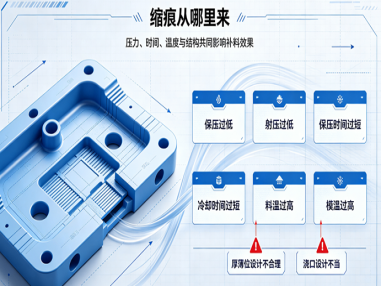
In-Depth Analysis of Sink Mark Defects in Injection Molded Products | Causes and Complete Solutions for Indentations at Ribs, Blind Holes and Grid Areas
I. Defect Overview: During injection molding production, the outer surfaces corresponding to reinforcing ribs, blind-hole screw bosses and grid rib positions of plastic products are highly prone to local sinking. The industry collectively calls this sink marks (shrinkage indentations). Mild sink marks affect the appearance of products and fail to meet the shipping standards for appearance parts; severe sink marks are accompanied by internal vacuum bubbles, reducing product structural strength and causing batch defects, raw material loss and delivery delays, making them a high-frequency pain point in the production of automotive parts, logistics baskets, daily necessities and home appliance housings...
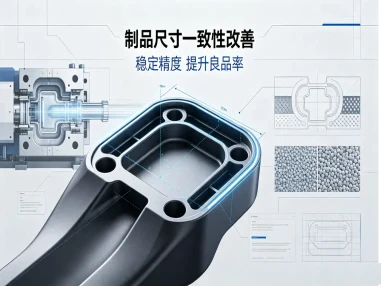
Cause Analysis and Optimization Improvement Scheme for Poor Dimensional Consistency of Injection Molded Products
Unstable product dimensions and poor dimensional consistency across batches are prevalent quality issues in the injection molding industry,Such d.