


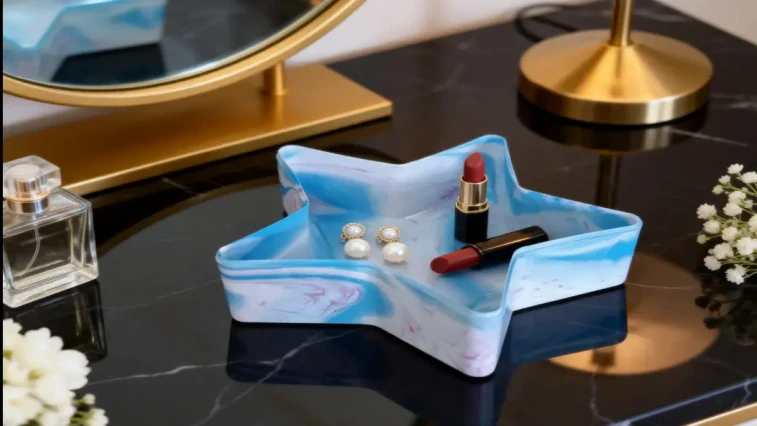

Konger CMS Color Mixing Injection Molding System: Breaking Traditional Two-Color Boundaries, Creating High-End Artistic Textures In the injection molding industry, traditional two-color machines focus on achieving clearly defined clear two-color effects, while the Konger CMS color mixing system is centered on distinctive effects such as two-color gradients, marble patterns, cloud patterns and inner-layer sandwich structures. It can achieve diversified, personalized two-color and multi-color mixing molding according to customer customization needs, making it a preferred solution for high-end injection molded products.
I. Core Technical Principle
The CMS series is fundamentally different from traditional two-color injection molding machines. Relying on a dedicated color-mixing nozzle and a precision dual control system, it achieves unique artistic texture molding:
Chameleon dynamic effect: by precisely controlling the pressure and speed of two or three groups of injection systems, the two colored melts form a controllable turbulent flow before entering the mold, naturally presenting artistic textures such as marble patterns and streamline patterns on the product surface.
Texture uniqueness: the texture of every finished product is naturally formed and unique, giving it strong market competitiveness in fields such as high-end daily necessities, cosmetic packaging and educational supplies.
II. Core Machine Model Classification
CMS two-color mixing is the classic basic model, adopting an A+B dual-injection-unit configuration to meet mainstream two-color mixing needs with broad applicability.
CMS-3Color three-color mixing is the brand's flagship model, capable of naturally interweaving three colors simultaneously, with a high technical barrier and few domestic manufacturers capable of stable mass production.
III. Core Selling Points of the Series
High-pressure injection stability: color mixing injection molding requires micron-level precision in back pressure and injection position; a tiny error can disrupt the texture. The CMS series is paired with a high-performance servo system, delivering outstanding stability.
Targeted screw design: for problems such as color powder agglomeration and uneven mixing, the screw length-to-diameter ratio (L/D) and compression ratio are specially optimized to ensure uniform and stable color mixing of the melt.
Strong mold compatibility: unlike the clear two-color process which requires complex rotary-plate molds, it imposes more flexible mold requirements, reducing supporting costs and commissioning difficulty.

IV. Main Application Fields
High-end home furnishing: marble-look basins, jade-look handles, artistic-texture fruit baskets, etc.
Educational supplies: color-mixed pen barrels, contrasting office stationery, etc.
Cosmetic packaging: artistic lipstick cases, high-end perfume caps, etc.
Automotive parts: interior parts with special visual requirements
V. Technical Considerations and Pitfall-Avoidance Guide
Scrap rate control: the core difficulty of the color mixing process lies in stably producing beautiful textures. The CMS system supports quick preset adjustment of the mixing ratio, effectively reducing the scrap rate.
Color-change cleaning optimization: the color-mixing nozzle has a special structure, and cleaning after color change is harder than for ordinary nozzles. The model has been designed with an optimized quick-disassembly structure to improve color-change efficiency.
VI. Machine Selection Tips
Mold space and tie-bar spacing: color-mixing machines are equipped with dual injection units and a color-mixing valve group, so the overall structure takes up more space. Selection must not only consider clamping force but also confirm that the tie-bar spacing can accommodate the mold size.
Flexible injection capacity ratio: supports differentiated configuration of the main and auxiliary injection units, enabling customized solutions such as “large machine with small barrel”, for example a 270-ton machine with a large injection unit for the main color and a small injection unit for the accent color — one of Konger's core advantages.
VII. Tonnage Range and Core Models
Konger CMS standard models are locked in the 140T–700T range, balancing process stability and mainstream market needs. Why start at 140T?
Physical space constraints: the dual-injection-unit + color-mixing valve group structure is complex, and small-tonnage machines cannot accommodate a compact layout;
Mold compatibility requirements: color-mixing product molds are generally larger, and the 410–460mm tie-bar spacing of the 140T model is the industry-standard starting point.
Why cap at 700T?
Process stability: beyond this tonnage, the melt volume surges and turbulent-flow control difficulty rises geometrically, making it hard to guarantee uniform and beautiful textures;
Market demand coverage: the 700T clamping force can meet the color-mixing production needs of the vast majority of high-end daily necessities, storage products and furniture accessories.
Tonnage Quick Reference
- CMS-140: small daily necessities, high-end stationery, e-cigarette shells
- CMS-230/260: star models, large cosmetic caps, two-color handles
- CMS-320/400: medium parts, marble-look basins, high-end fruit trays
- CMS-500/700: large color-mixed parts, marble-look small stools, large storage boxes
Supplementary Note: Although CMS standard models cap at 700T, if customers have customization needs for extra-large products (such as marble-look large tabletops), Konger can provide deeply customized solutions.